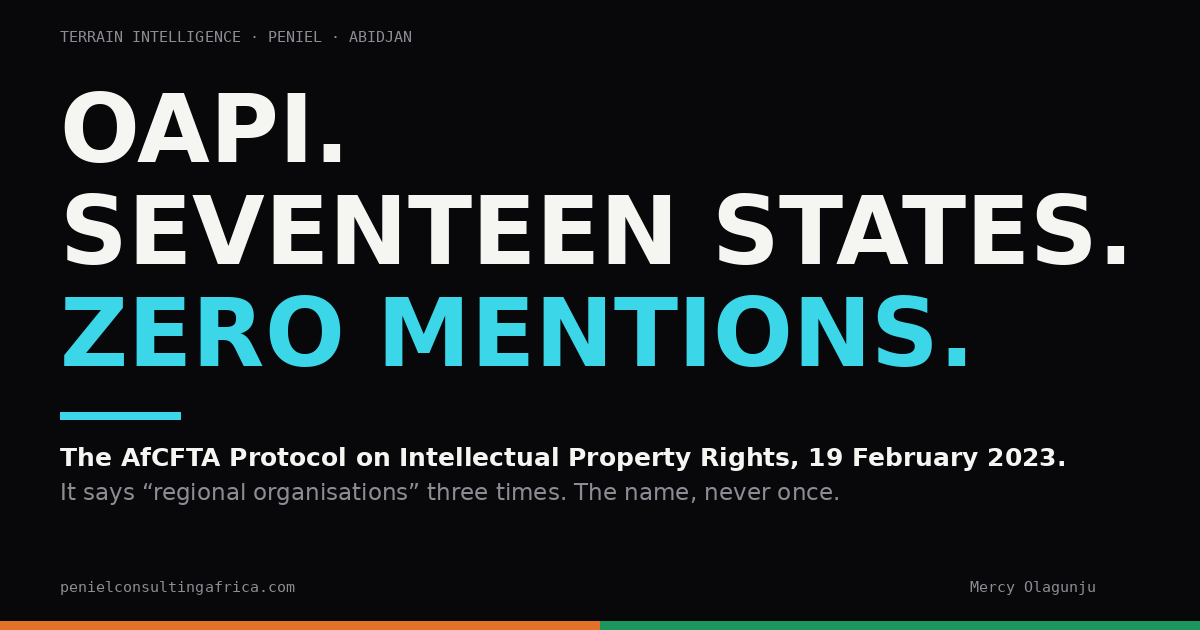
OAPI Grants Your Title. The Protocol Will Not Say Its Name.
Seventeen countries share one mandatory industrial property title and no national alternative. Twelve of them are least developed countries holding a WTO flexibility they cannot use.
Read the dispatch →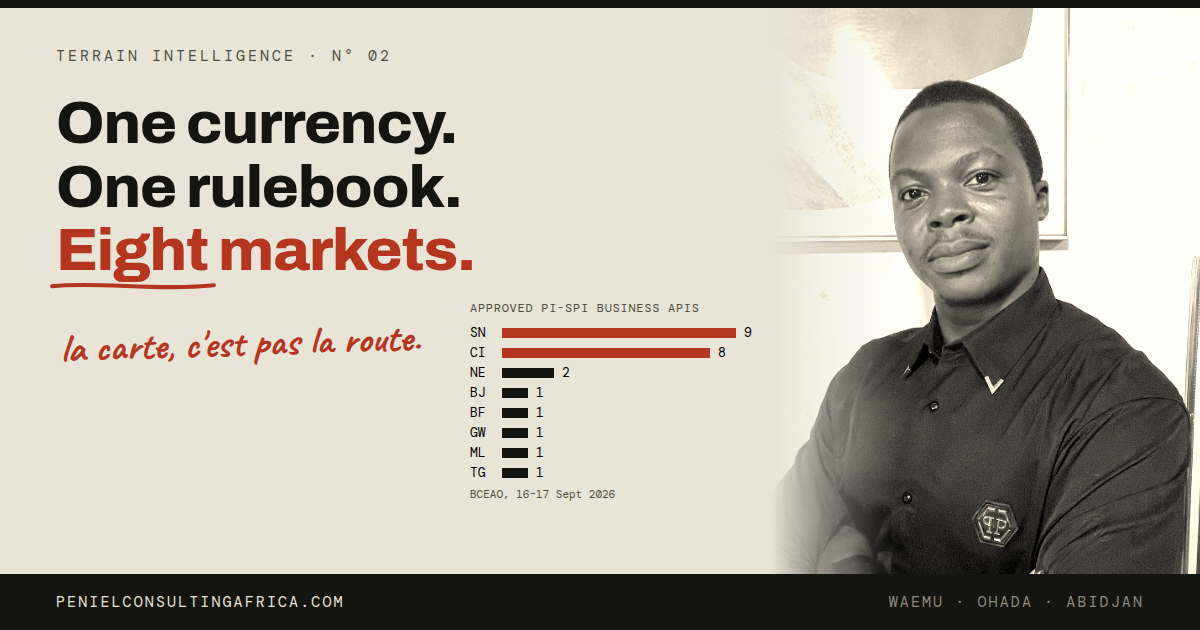
One Currency. Eight Markets.
The WAEMU zone shares one currency, one central bank and one business law. If common rules made a single market, this would be it. Four readings show otherwise: one rulebook, eight different grounds.
Read the dispatch →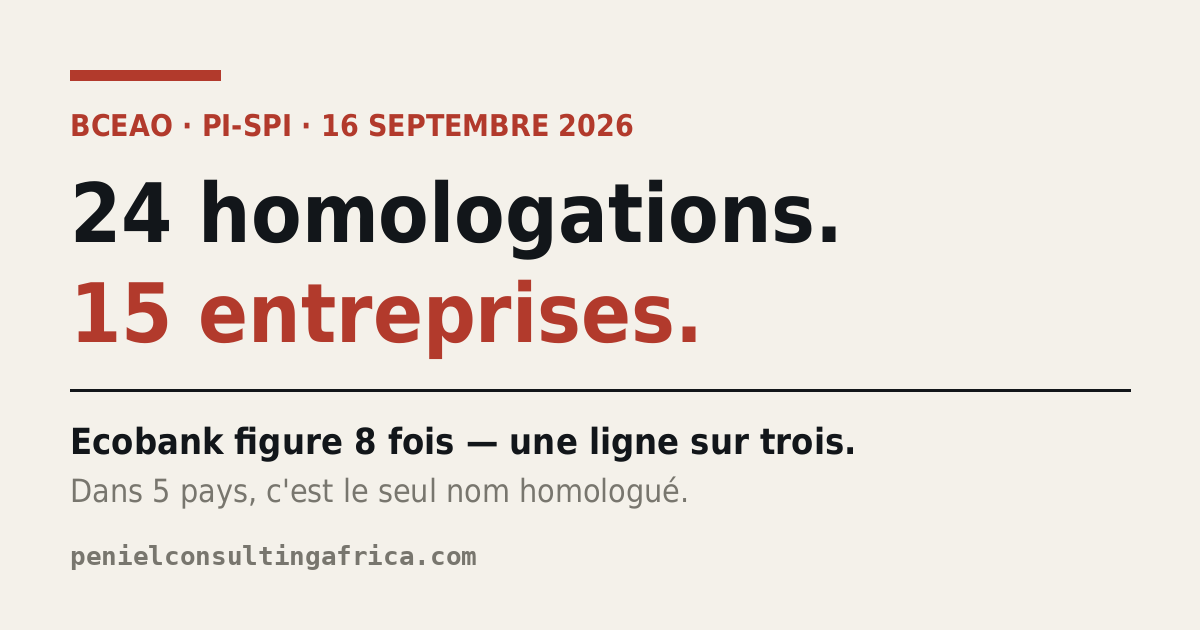
Twenty-Four Names. Fifteen Companies.
The BCEAO published the list of Business APIs cleared for its instant payment rail. Twenty-four lines, eight countries. Count companies instead of lines and fifteen remain — with one name holding a third of them. The deadline falls in ten days.
Read the dispatch →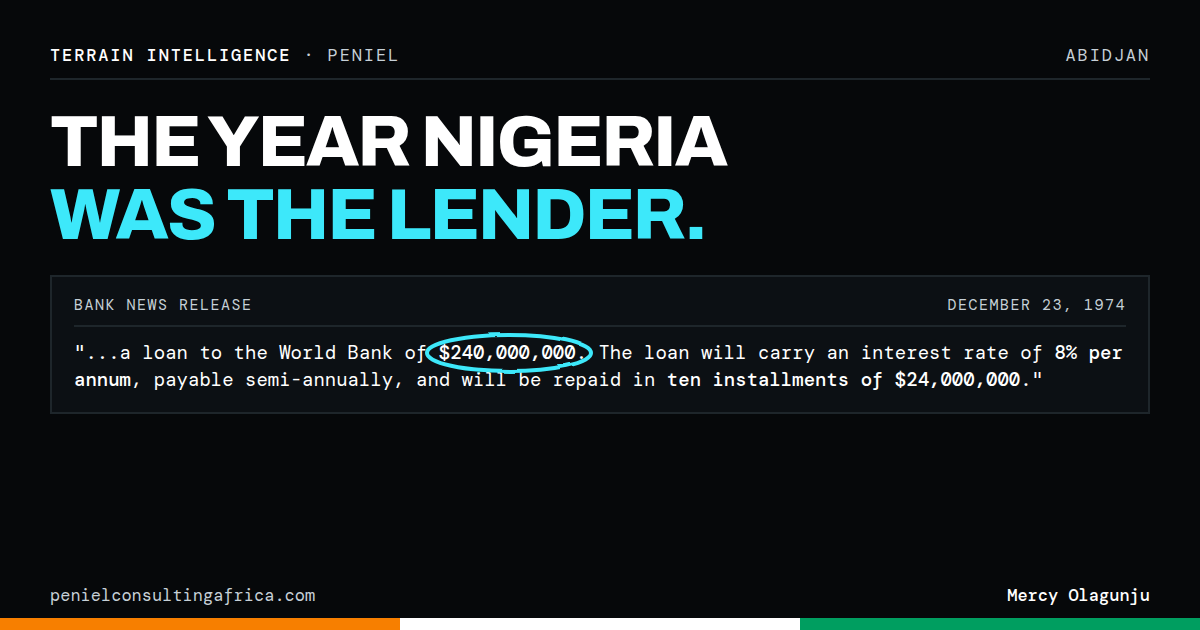
The Year Nigeria Was the Lender
In December 1974 the World Bank borrowed $240 million from Nigeria, at 8%, repayable over ten years. This month Nigeria is the Bank's third-largest concessional borrower, and a single private refinery is valued at more than two-fifths of its stock market. The full ledger, both ends, with the documents.
Read the dispatch →
Yes, You Can Take Your Money Out. That Is Not the Question.
The regulation everyone still quotes on repatriating capital from the WAEMU zone was repealed in December 2024. Here is the one that applies, what it actually permits, and why your bank will still ask for a file.
Read the dispatch →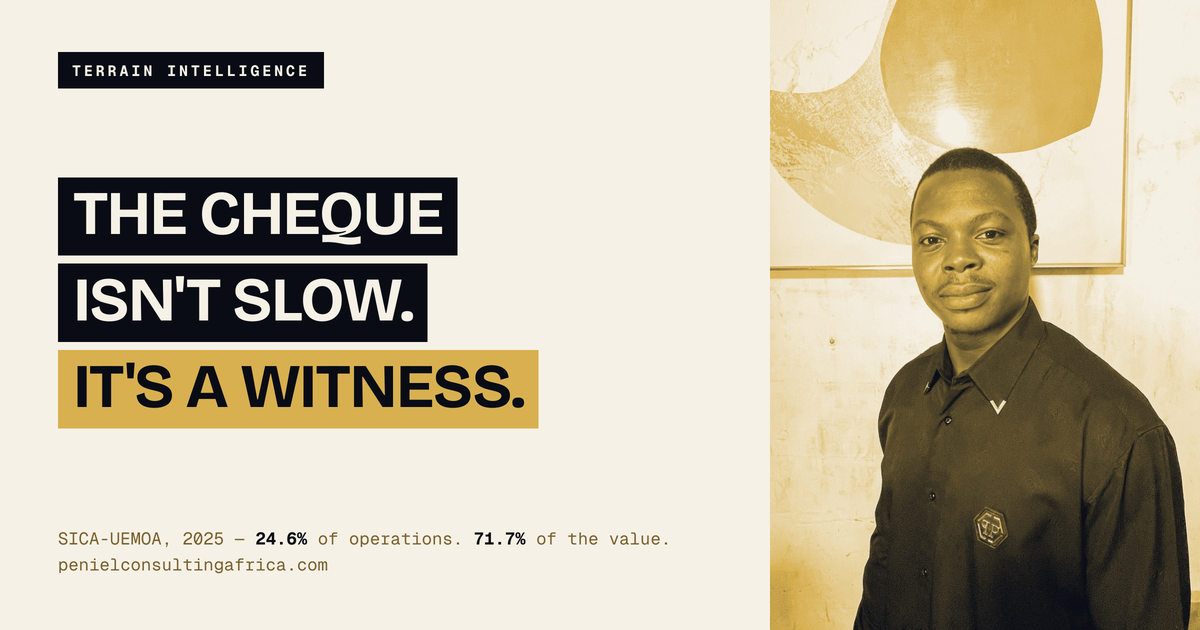
The Cheque Isn't Slow. It's a Witness.
The BCEAO built an instant payment rail that moves money in seconds across eight countries. In the same year, cheques carried 71.7% of the value in the region's retail clearing system — on 24.6% of the transactions. That gap isn't a technology problem.
Read the dispatch →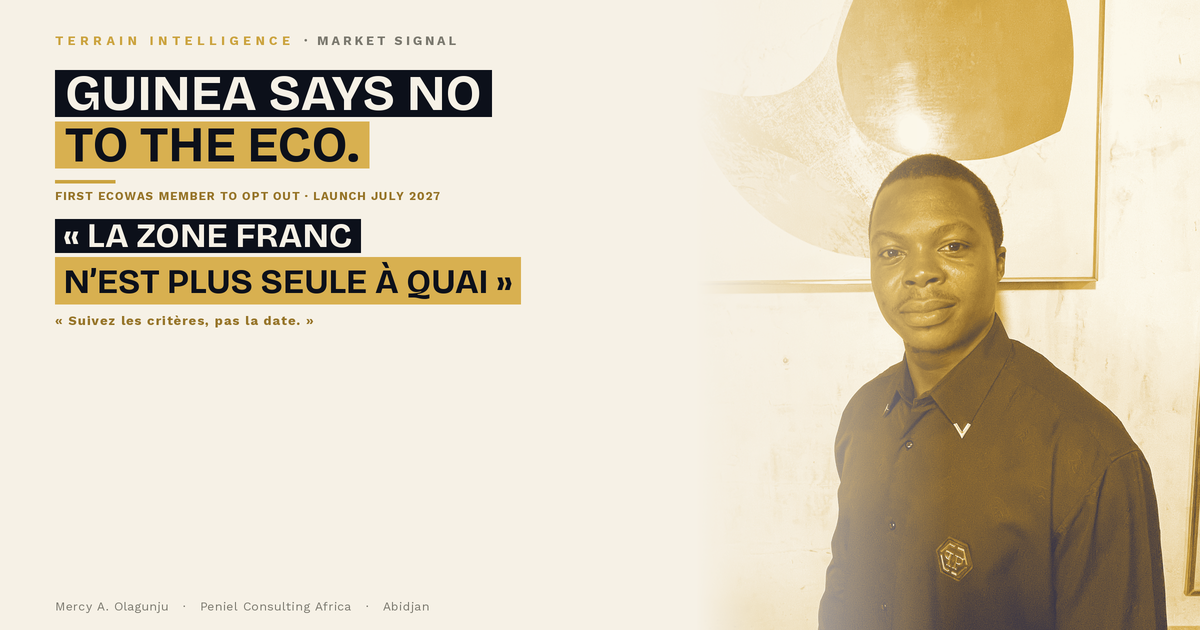
The First Country to Say No to the Eco Wasn't in the Franc Zone
Guinea has become the first ECOWAS member to formally opt out of the Eco, weeks after the bloc reaffirmed a July 2027 launch. What the first defection tells you about a currency union that starts with whoever is ready.
Read the dispatch →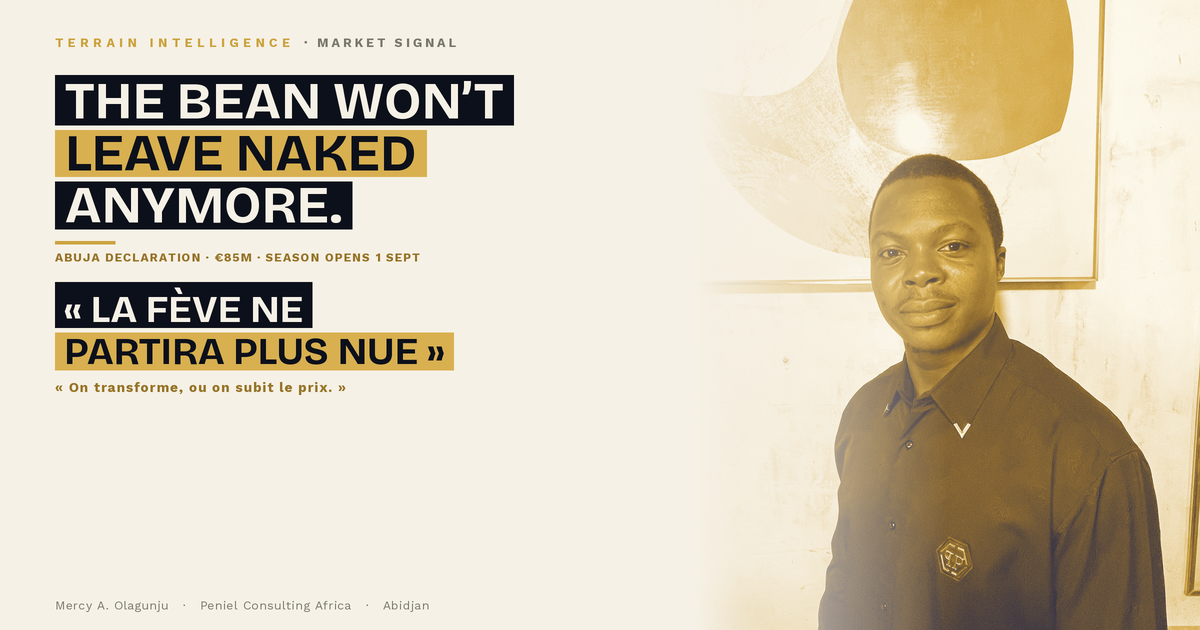
The Bean Won't Leave Naked Anymore — Inside the Four-Nation Cocoa Alliance
On 1 September the 2026/27 cocoa season opens — and for the first time the four nations that grow most of the world's cocoa are moving as one bloc to stop shipping the bean raw. What the Abuja Declaration and the EUDR clock mean for anyone in cocoa.
Read the dispatch →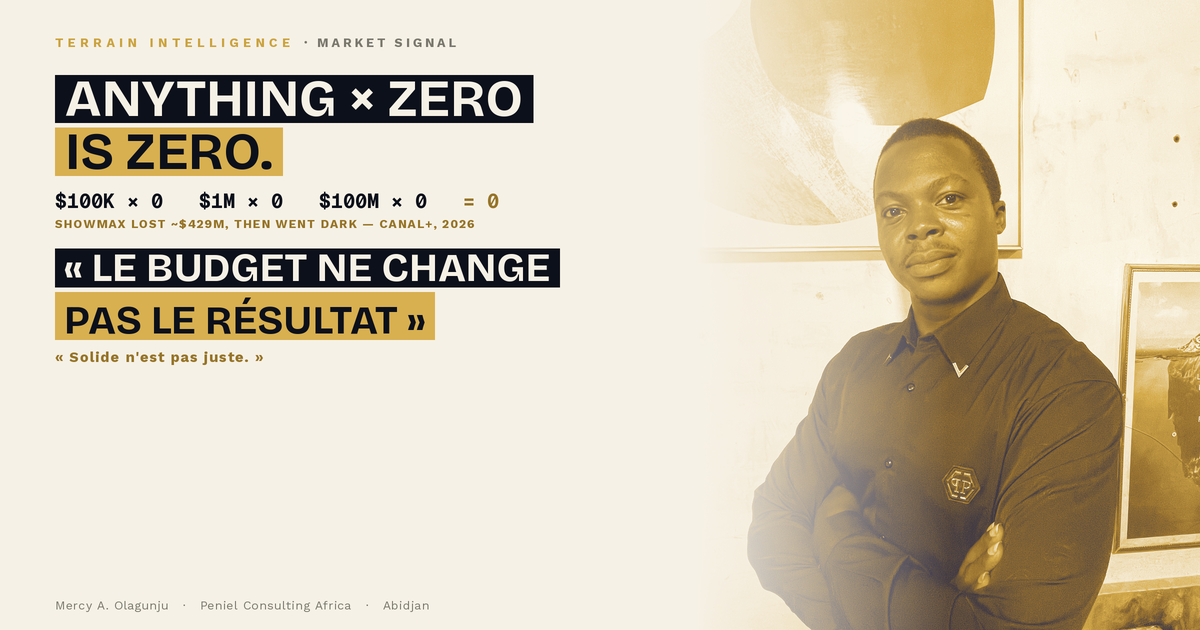
Anything Times Zero: Why Budget Never Rescues a Wrong Hypothesis
The best-funded streamer on the continent went dark in 2026. It didn't fail because Africans won't pay — it billed the wrong way into a mobile-money market. A terrain reading of the Showmax tombstone.
Read the dispatch →
The Market Forgets a Price. It Never Forgets How You Made It Feel.
A price war is the easiest fight to start in this market — and the one you can't win. The durable moat here isn't the discount. It's the trust a local voice hands to a buyer, in the language of the street.
Read the dispatch →
Follow Who Know Road — why your market report is lying to you about Africa
Fifteen years on the ground, from Abidjan to Kinshasa: the Apple lesson, the trade-bloc reality, the experience gap, and the AI trap. The report is the map — not the terrain.
Read the dispatch →WAEMU just built a backstop and set a belt-tightening path
On 3 July in Ouagadougou the Union switched on its Financial Stability Fund and fixed a 2.9%-of-GDP deficit path. The state is stepping back as financier — and the "stable region" average hides one member near 132% debt/GDP. What the 3 July Council means for your entry.
Read the dispatch →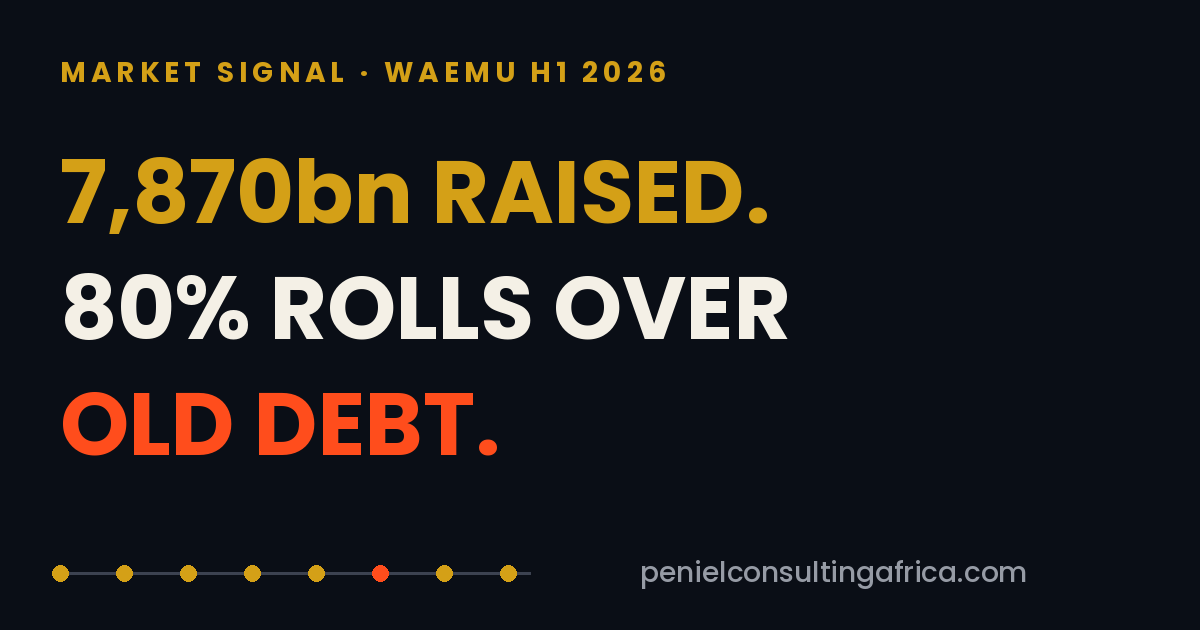
A record 7,870bn FCFA raise — and 80% of it only rolls over old debt
The headline says deep local capital. The redemption line says ~80% refinances maturing debt, and two borrowers took 63% of all issuance. The number that decides your funding strategy is not the one in the headline.
Read the dispatch →
Your Francophone exports now enter China duty-free — read the fine print
China zeroed the 8–30% tariff on Ivorian cocoa and every WAEMU commodity. But duty-free is claimed, not automatic — and Côte d'Ivoire is on a 2-year clock. What exporters must actually do.
Read the dispatch →
Who really makes money in Francophone Africa now?
The 2017 map said France — currency, troops, politics, language. By 2026 the bases are gone, China took the trade crown, the CFA grip loosened, and Africans are redrawing the map. Who the new gatekeepers are, and what it means for your entry.
Read the dispatch →
83% accept mobile money. So why can't my users pay?
The ITC's 2025 e-payments report is right about the appetite and quiet about the rail: 83% accept mobile money, but cross-border interoperability still fails — and the fix it names keeps slipping. Reading the numbers from the ground.
Read the dispatch →
Interoperability: friction or fiction?
WAEMU's single instant-payment rail was "mandatory" — until it was postponed five days before, again. Meanwhile users still can't pay. The gap between the announcement and the ground, and what it means for your entry.
Read the dispatch →
Côte d'Ivoire's PND 2026–2030: what a 70%-private plan means for your entry
A state betting 70% of a $200bn national plan on capital it doesn't control is a demand signal — not a subsidy. Where the tailwind blows, and the gap between the ambition and the ground.
Read the dispatch →
The frontier everyone can see and no one can measure
WAEMU's informal economy runs to ~92% of employment — bigger than Nigeria's, and less measured. Why the market you can't count is the one that decides, and what that means for deploying capital.
Read the dispatch →
Why well-capitalised firms fail in Francophone Africa within 18 months
Three failure modes that appear in no market report — regulatory timelines, distribution, and relationships — and how terrain intelligence catches them before month 14.
Read the dispatch →
OHADA & CEPICI: the real company registration timeline in Côte d'Ivoire
The official 24–72 hour promise versus what registering and *operating* a company actually takes — and the sequencing trap that turns three weeks into three months.
Read the dispatch →